What If Fabric Could Help Cool Our Cities?

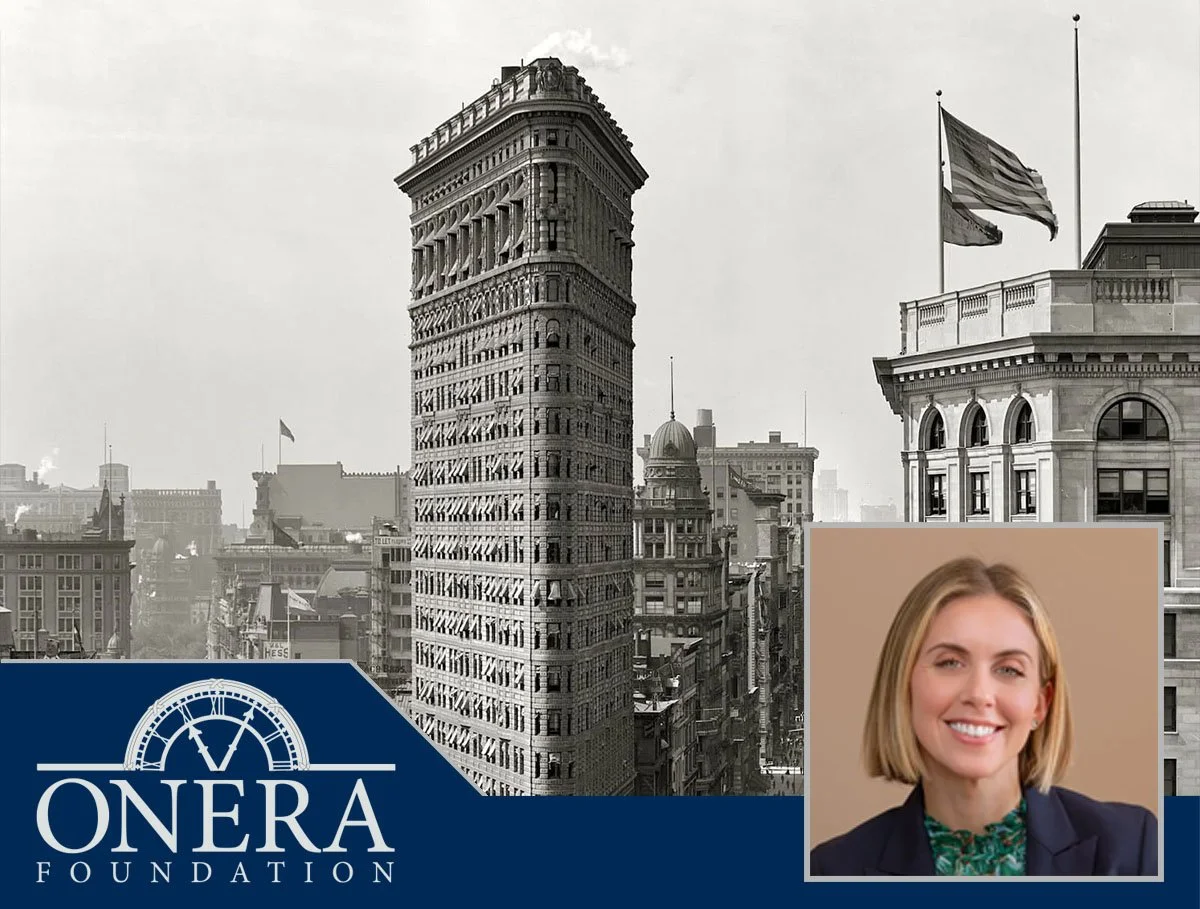
On April 28, the Onera Foundation welcomes Onera Prize 2025 recipient and interior designer–turned preservation research fellow Anne Maxwell Foster for a talk that revisits one of the most overlooked elements of the built environment: the window awning.
Once a defining feature of city streets, awnings offered a simple, low-tech way to reduce heat and improve comfort long before air conditioning. Today, Foster’s research asks what these forgotten elements might still offer—and what stands in the way of bringing them back.
Ahead of her talk, we asked her a few questions about her work.
You started in interior design—what led you to preservation research focused on climate?
My earlier work in interiors centered on residential renovation projects across the country, with many in New York City. Those projects sparked a deeper curiosity about older buildings. Opening walls revealed layers of fascinating history. I became interested in how spaces were constructed, who built them, and how they could be reimagined for contemporary use. That curiosity led me to the Historic Preservation program at Columbia GSAPP. There, I was introduced and began to understand the connection between the built environment and carbon emissions. Operating buildings through heating, cooling, and power accounts for more than a quarter of global emissions. That realization really shifted my focus. Retrofitting historic buildings became not just a design challenge, but a climate imperative that deserves immediate attention.
What made you take something as overlooked as window awnings seriously as a climate strategy?
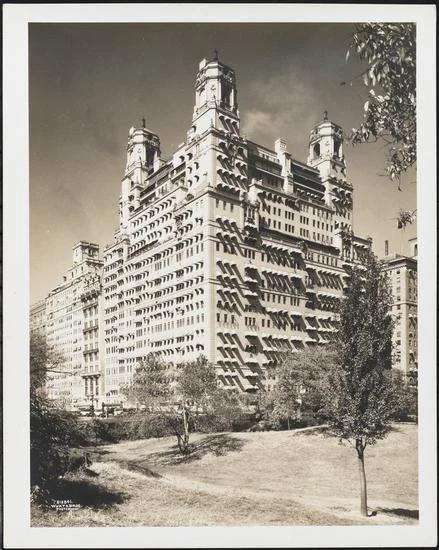
The idea grew out of a combination of coursework and research. A studio course that experimentally considered the embodied carbon of Columbia’s historic campus, along with broader climate-focused work at the architecture school, shaped my thinking. At the same time, I was studying the historic architectural photo archive of New York City, where I noticed how awnings were nearly ubiquitous in the summer months from the mid-19th century through the early 20th century.
Certain references stood out, including Professor Françoise Bollack’s introduction of the image of Beresford on the Upper West Side. My work as a climate research fellow for the National Trust further pushed this inquiry. My fellowship work focused on retrofit strategies for older buildings, especially passive features that already exist within historic design. The window awning emerged as one compelling example of how a low-tech solution from the past could have real potential for today’s buildings.
Your work brings textiles into conversation with architecture—what can “soft” materials do that buildings alone can’t?
A quote from Financial Times architecture critic Edwin Heathcote captures this well. He described awnings as “lightweight, mechanical, flexible, responsive, adaptable.” Most buildings are inherently fixed. Soft systems like awnings introduce a layer of responsiveness that architecture alone often lacks. They can adjust to changing conditions, provide shading when needed, and be deployed or removed with ease. While high-tech, new solutions are imperative for combating climate change, simple and adaptable elements like awnings could also offer an immediate and scalable way to reduce heat gain. In a warming climate, that kind of flexibility is incredibly valuable.
Even if awnings work technically, what stands in the way of bringing them back at scale today?
There are real trade-offs and practical challenges with awnings. Today, the industry is relatively underdeveloped, and availability can be limited. From a purely economic standpoint, awnings are not always seen as a compelling investment. Much of this analysis will be presented in greater detail in my talk. That said, this could change quickly. Increased consumer interest, combined with government support and preservation incentives, could shift the equation. With the right momentum, awnings could really become a practical and attractive solution. They represent a simple idea from the past that could be reintroduced at scale for the future.
What will you be sharing at Onera that people shouldn’t miss?
My presentation will provide a mix of visual and analytical work. The historic images alone are fascinating and reveal just how widespread awnings once were across so many building types, and much of this has been completely forgotten from our collective memory. Alongside that, I will present research that began with my thesis and has continued with support from the Onera Prize. One highlight is the use of energy modeling to evaluate awnings within a preservation framework. It is an experimental approach with real-world implications. While a talk on window awnings might seem unexpected, I have found that it tends to spark lively discussion! The most rewarding part is engaging with questions about how these ideas could move from research into real-world practice. I am greatly looking forward to continuing that conversation with a new audience at Onera.